 Inkoders
Money Can Buy Happiness?? A Deep Dive Into The Psychology of Money
Low earnings don't break a person—unrestrained appetite does. Read through the life of Ronald James Read, a testament to how patience can elevate a simple janitor into a millionaire philanthropist.

A popular perspective shared by many recently is that money cannot buy happiness.
To a certain extent, I do agree with this saying—on a short temporal scale, wealth certainly allows individuals to purchase luxury goods or exclusive privileges that temporarily satisfy human nature’s unlimited wants. However, on a long-term scale, material acquisitions often fail to create lasting contentment.
Rather, where money truly affects human well-being is not in consumption, but in control.
Financial capital provides the privilege to make decisions and bear the costs: the autonomy to walk away from a toxic workplace and shield your mental state from burdensome environments. Ultimately, money buys happiness by securing the freedom to dictate your life.
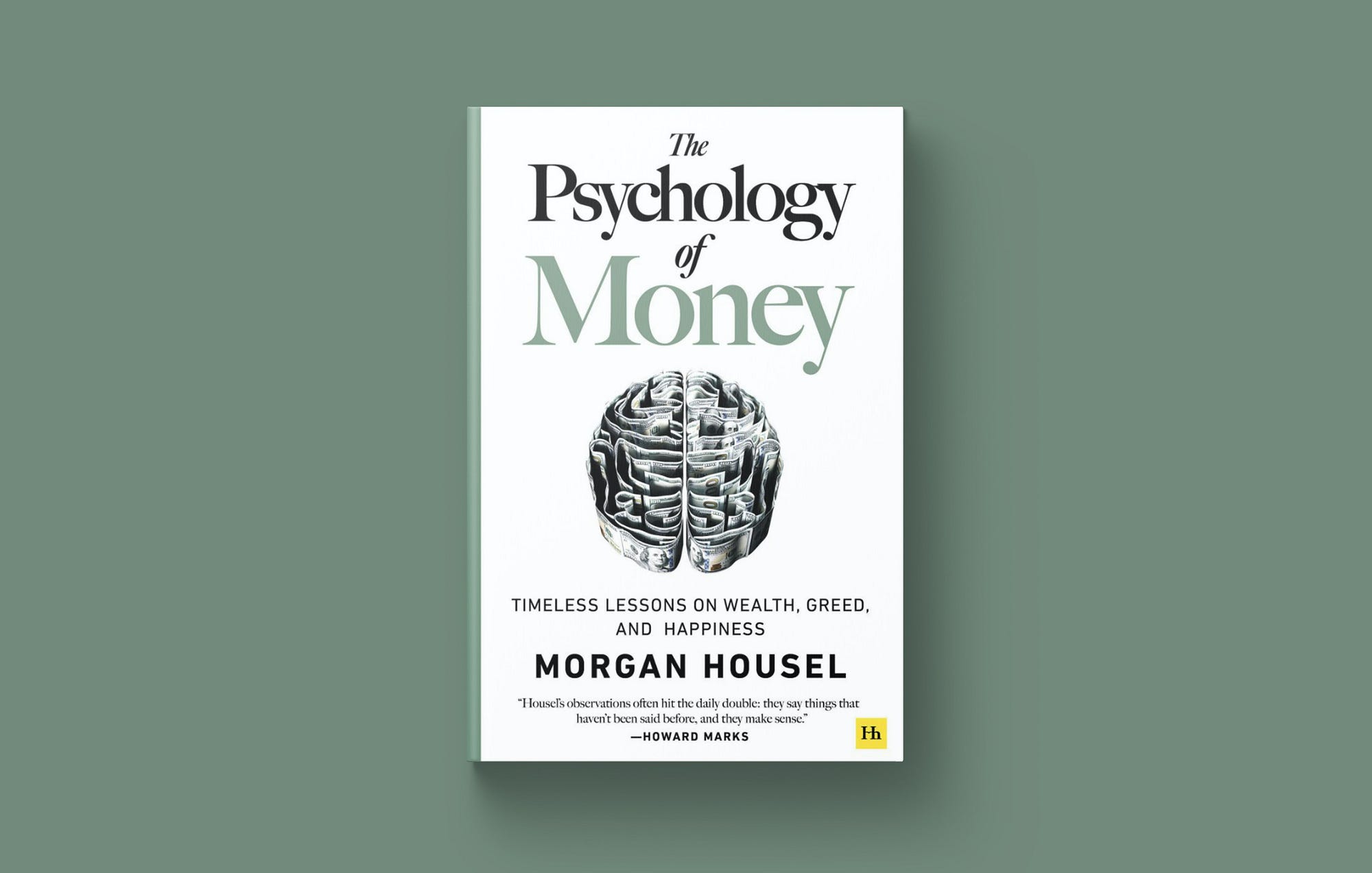
In The Psychology of Money, Morgan Housel demonstrates that financial success relies on retaining this personal power rather than accumulating visible status symbols by outlining 20 key mentalities revolving around the strategic discipline of saving and spending. He emphasizes that “wealth is simply unspent option value: the financial leverage that grants you the highest dividend money pays: the ability to wake up every morning and say, ‘I can do whatever I want today.’” True wealth consists of the savings that safeguard your agency and prevent you from losing control over your life choices.
Housel lays bare this abstract psychology by displaying the starkly divergent paths of two men. First, we have Ronald Read, a humble janitor who quietly accumulated an $8 million fortune by saving small amounts consistently over decades and letting compounding work, demonstrating the power of patient asset accumulation. This is contrasted with Richard Fuscone, a Harvard-educated financial executive who declared bankruptcy despite earning millions due to excessive borrowing for his Greenwich mansion dream. Read’s behavioral patience granted him total freedom and peace of mind, whereas Fuscone’s lack of emotional regulation stripped his financial autonomy away entirely. This contrast exposes the asymmetric paradox of behavioral determinism—acquiring money requires aggressive optimism, but keeping it demands humility and emotional discipline. The true skill is to find a balance between the two, the line of separation between satisfaction and greed.
The main takeaway from this book is that managing money is fundamentally a soft skill, built upon human behavior, psychology, and self-discipline, rather than a hard skill of mathematical calculation.
Understanding the behavior of the economy—the core values and human psychology that do not change alongside evolving technology—is essential foundational knowledge to thrive in any era and in any environment.
About the author
Co-Founder & Global Vice-Chairman
It was through my first robotics competition that I first appreciated the brilliance of technology, as well as the creativity and love behind a robot's sophisticated systems. Through my journey in various robotics competitions, from 5th runner up to Hong Kong champion, and ultimately participating in the international round, I witnessed the art of technology unfold before me. The lines of complex, incomprehensible code on my laptop – the PID equations, the quartic equations for motor speed interpolation, gradually transformed into a beautiful and flawless logical framework. Then, it is through my hackathon competitions, where I see the power of aspiration and ambition; in the future era of technology comes the realisation of utopian ideologies. Aspire to achieve. People who dream big will achieve big; therefore, dream of reaching the stars, even if we fail, we will still land on the moon. Technology brings opportunities, illuminating our path to the stars.This is how Inkoders was established: to bridge dreams to reality through the empowerment of technology. Yet, let us not forget what makes humans human – the foundational literacy that is passed down from generation to generation, completing our shared humanity – technology will not, and will never replace human ingenuity, for the arts and passions could never be replaced. I see the potential of Inkoders and our mission to prepare individuals for the future technology era – to connect worlds of dreams, to connect passionate individuals who dare to dream big.
Profile & more perspectives →More perspectives
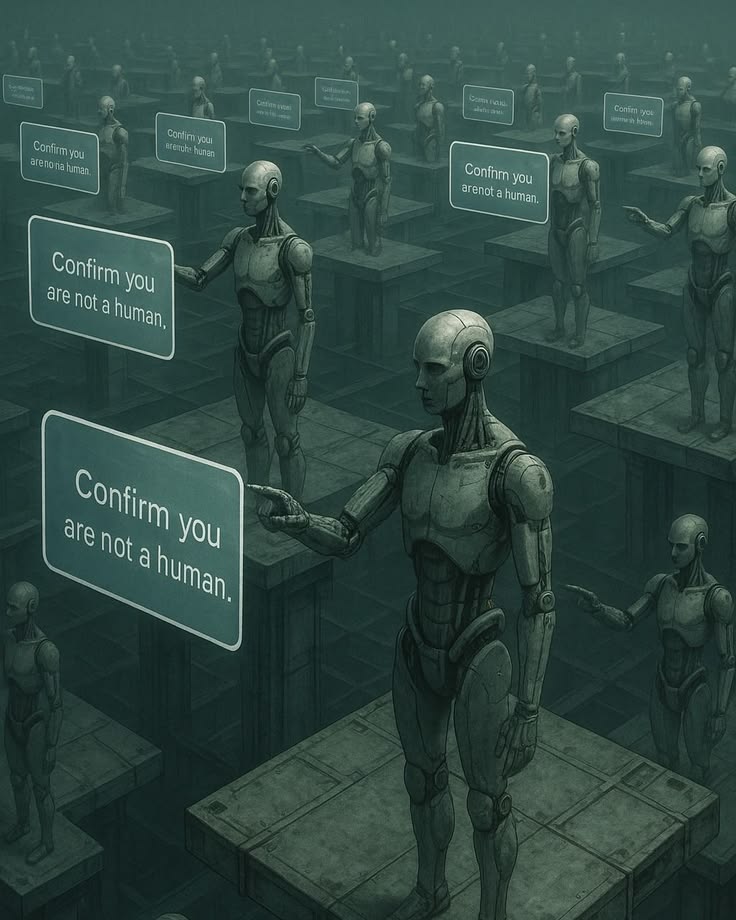
AI Should Partner With People, Not Replace Them
why human-AI collaboration, foundational literacy and technological literacy matter in the AI-driven world.
By Casey Yu Yuet9 Nov 20262 min read

Raising the Floor or Raising the Costs? The FTC Systemcore Hardware Debate
Will the switch from REV Control Hub to Motioncore benefit teams?
By Caleb Lo Chung Wai8 Nov 20264 min read

Fidelity is a Function of Neglect — Reconsolidation & the Violence of Recall
Our memories are not static records but fragile reconstructions, constantly edited and rewritten every time we dare to recall them.
By Averie Yip Yee Tsun7 Nov 20265 min read