 Inkoders
Raising the Floor or Raising the Costs? The FTC Systemcore Hardware Debate
Will the switch from REV Control Hub to Motioncore benefit teams?

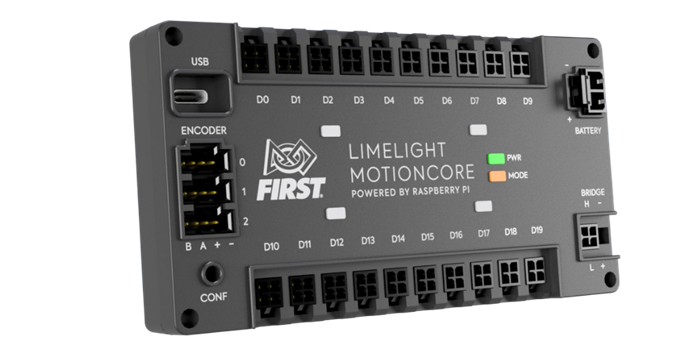
The introduction of Motioncore (alongside Systemcore) is one of the biggest architectural shifts in FIRST Tech Challenge (FTC) control system history. Developed as part of the next-generation control system ecosystem in collaboration with Limelight and FIRST, Motioncore specifically transforms power distribution and actuator communication on FTC robots.
In the legacy control architecture, the REV Control Hub and Expansion Hub managed both general processing, sensors, and direct power/PWM signal routing to motors and servos.
Under the next-gen architecture, processing and power/actuation are split:
Systemcore: Handles main high-level robot processing, computational logic, and primary sensor I/O (replacing the Control Hub processing functions).
Motioncore: Serves as the dedicated power and CAN (Controller Area Network) communication distribution hub. It connects to the new FIRST A301 Actuators (integrated CAN-based smart brushless motors) and smart sensors.
The announcement and ongoing rollout of Systemcore (and its companion architecture including Motioncore and the FIRST A301 Actuator) have sparked extensive debate across both the FIRST Tech Challenge (FTC) and FIRST Robotics Competition (FRC) communities.
While FIRST and Limelight designed the platform to modernize processing, improve ESD/short-circuit protection, and raise the baseline for team capabilities, community discussions focus on hardware reliability during testing, financial burdens, and shifts in technical accessibility.
The decision to make Systemcore and Motioncore the mandatory standard in upcoming seasons carries significant financial implications. For example, teams have invested thousands of dollars over the years in standard DC motors (REV HD Hex, GoBILDA Yellowjackets), PWM servos, and 12V batteries. The transition to Motioncore requires a complete move to the new A301 CAN-based brushless actuators and 18V power tool battery docks, leaving years of legacy inventory obsolete for official competition.
Also, switching to a single unified motor/actuator model (A301) raises concerns about potential supply chain shortages, pricing power, and stock availability ahead of kickoffs. Unlikely previous seasons with multiple independent vendors (GoBILDA, AndyMark, REV Robotics), a single supply for Systemcore and Motioncore may lead to critical issues within the season.
Following initial alpha testing, full field implementation of Systemcore and Motioncore is slated for upcoming seasons (targeted for standard rollout around the 2027–2028 season).
As FIRST Tech Challenge enters this transformative era, the shift toward Systemcore and Motioncore represents a fundamental evolution of how FTC robots are designed, powered, and controlled. While the promise of robust electrical safeguards, standardized CAN-bus architecture, and higher processing ceilings offers an exciting vision for the future of student robotics, the transition is not without real friction. Addressing early reliability concerns, mitigating the financial burden on under-funded teams, and balancing plug-and-play convenience with foundational technical education will determine how smoothly this new platform takes root.
Ultimately, the success of the Systemcore ecosystem will rely on FIRST's responsiveness to mentor and student feedback, ensuring that as the technology advances, the core mission of accessible, inspiring STEM education remains firmly intact.
About the author
Operations & Logistics Officer
The future belongs to those who build it. From an early age, I’ve held a deep curiosity for how things work, driving me to tinker, code, and push the boundaries of technology. Whether leading FIRST Tech Challenge Team 34103 Control C as its founder, advising the CKY Robotics programme, or competing on international stages representing Hong Kong, China, every step of my journey has reinforced a single core truth: innovation is built on problem-solving, collaboration, and continuous growth. From CAD designs and AI visual recognition to hands-on LEGO Education, hands-on engineering has taught me that technology is the most powerful tool we have to shape tomorrow. In an era where technology evolves at a breakneck pace, technological literacy has evolved to no longer just an advantage to an absolute necessity. Having navigated multinational robotics competitions, I have seen firsthand how transformational early access to STEM can be. Yet, millions of young minds are left behind without the opportunity to experience the power of programming and robotics, creating a gap between those who consume technology and those who create it. My journey isn't just about constructing robots or writing code; it’s about sharing that knowledge, developing my own leadership, and elevating the team around me. This is why I joined Inkoders: to leverage my expertise in robotics and AI to bridge the technological divide, empowering the next generation with the hands-on STEM skills they need to innovate, collaborate, and lead in a digital world. Together let’s AIM to aspire, innovate, and master together.
Profile & more perspectives →More perspectives

AI Can Write a Novel. But It Still Can't Write Literature.
The industry's rush to automate writing says less about AI than about what it has stopped valuing.
By Ariel Shing Yi Nga6 Nov 20264 min read

Bending Space, Time and Conformity: A Madeleine L’engle Literary Classic
Meg Murry embarks on a captivating journey through tesseracts to rescue her missing father from an all-consuming cosmic entity, exploring core themes of individuality and the importance of embracing one's imperfections within A Wrinkle in Time.
By Anette Chan Tsz Kiu3 Nov 20265 min read

Beyond the Page: How Interactive 3D Textbooks Are Revolutionizing Learning
By transforming abstract concepts into interactive digital experiences, new 3D textbook platforms are bridging the gap between foundational education and modern technological literacy.
By Alpha Chan Lok Chi2 Nov 20263 min read