 Inkoders
Fidelity is a Function of Neglect — Reconsolidation & the Violence of Recall
Our memories are not static records but fragile reconstructions, constantly edited and rewritten every time we dare to recall them.

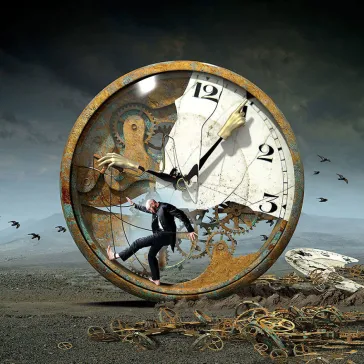
Before anything else — before the rat, the syringe, the experiment — you should be told something about how memory works. The brain does not recall an event exactly as it originally happened, but instead, reconstructs it. Under certain conditions, recalling a memory can also make it temporarily vulnerable to change before it is stored again, a process called reconsolidation.
What you have now is a reconstruction — it is protein, laid down fresh each time the past is called to the stand, a small act of authorship disguised as testimony. The hippocampus does not archive, but improvises, then files the improvisation under the same name, in the same drawer, with the same handwriting.
Hence, there is no original. There is only the most recent draft, and a habit of calling it the first.
It begins, as these things often do, with a rat. In 2000, Karim Nader, Glenn Schafe and Joseph LeDoux challenged one of the field’s most established assumptions that once a memory had consolidated, or stabilised for long-term storage, recalling it would not make it unstable again. They taught rats to fear a tone, let the memory consolidate, then played the tone again and immediately injected anisomycin — a protein-synthesis inhibitor — into the basolateral amygdala. The memory vanished. The same injection, given without first replaying the tone, left the memory intact. Delayed by six hours, it produced no amnesia at all. Therefore, the results implied that retrieval had reopened a time-limited window, where a consolidated memory, once retrieved, does not sit still to be read but liquefies and must be rebuilt, protein by protein, before it can be stored again.
The amnesia produced this way showed no spontaneous recovery and could not be reinstated by reminder shocks — unlike extinction, that polite fiction which fades and returns. The old memory was not suppressed. It was simply not there.
Then came the clinical sequel, a tragedy in three acts. Reactivate a traumatic memory under propranolol, and physiological fear responding falls. Although the emotional charge appears impaired while declarative content is spared, the fact survives, though the weather is taken out of it. For a while, this looked like mercy. But in 2022, when the clinical trials were pooled, propranolol showed no overall benefit for PTSD symptoms or physiological fear responses, raising questions regarding whether the rodent findings had translated into dependable treatment. The promised erasure never arrived. What arrived instead was the further evidence that memory is unstable, without a dependable permission to edit it.
Reconsolidation is not a law, which is where the essay must be more honest than its own metaphor. Its effects depend on prediction error, memory age and strength, where recent memories are far more vulnerable than remote ones. So the true sentence is not that every act of recall destroys a memory. It is that retrieval can open a door, and then close it — whether or not you noticed, whether or not you consented.
And so we return to the central wound. The person you miss most is the person you have edited most. Fidelity is a function of neglect — accuracy preserved only by abstinence, and abstinence is the one thing grief will not permit. The memory you guard most carefully is the one you have already ruined. You will keep guarding it, and that is the part no paper explains. For none of this is visible from inside. Recall is not retrieval, but demolition with a permit, granted quietly, countersigned in your own hand, and what it leaves behind is a feeling of certainty. You do not feel the rebuilding, you solely feel the seamlessness, and mistake it for the truth.
We have responded to this instability by building machines that appear not to forget. The photograph, the chat log, the voice note — each promises an archive outside the skull, a past that cannot be revised by mood or need. But literacy in these systems means knowing what they do not say. A camera captures a frame, not a person. A message thread preserves wording while discarding tone, hesitation, the hour of the night it was sent, the thing that was almost typed and deleted. Even the algorithmic feed, which seems to return the past on request, is not returning it, but solely selecting it, ranking it, deciding which version of you deserves to be reminded. We have become fluent in storing information and strangely illiterate in reading what storage leaves out, because the archive does not rescue memory from reconsolidation, but rather gives the revision more material to work with.
So, when you say you remember them, you are solely reporting the most recent revision of an event, certified as original by a witness who cannot see their own edits.
About the author
Director of Editorial & Media, Inkoders Hong Kong
A child of two worlds — of wards and wires, of stethoscopes and syntax, of bodies that ache and algorithms that learn. That is why I joined Inkoders, for I refuse to inherit a future where the language of code and the language of books are spoken by separate worlds, as though two cities divided by an uncrossable river. “The medium is the message,” Marshall McLuhan warned, and I have spent my life learning to read both. Therefore, I believe that the most significant innovations are those that transform tools into bridges and knowledge into something that can be carried, shared, and lived. The interstices of different fields have marked my journey. From hospital wards that taught me the body speaks in whispers before it screams, research that taught me to map the threads that tether flesh to soul, to shared endeavours that taught me truth emerges from the friction of minds in motion. These experiences have taught me to write with precision, to think with care, and to recognise that expertise is only meaningful when it serves something larger than itself. Beyond science, I am deeply devoted to the craft of language — to the art of poetry and the cadence of prose. I am currently writing a book that bridges medicine and psychology, tracing the bridge between diagnosis and despair, where physical suffering meets human memory. This same belief in the humanising power of storytelling fuels my vision for technology, for I believe the future of technology and literature is bright, but only if we build it together. Only if we write it together. Only if we sing it together.
Profile & more perspectives →More perspectives
AI Can Write a Novel. But It Still Can't Write Literature.
The industry's rush to automate writing says less about AI than about what it has stopped valuing.
By Ariel Shing Yi Nga6 Nov 20264 min read

Bending Space, Time and Conformity: A Madeleine L’engle Literary Classic
Meg Murry embarks on a captivating journey through tesseracts to rescue her missing father from an all-consuming cosmic entity, exploring core themes of individuality and the importance of embracing one's imperfections within A Wrinkle in Time.
By Anette Chan Tsz Kiu3 Nov 20265 min read
Beyond the Page: How Interactive 3D Textbooks Are Revolutionizing Learning
By transforming abstract concepts into interactive digital experiences, new 3D textbook platforms are bridging the gap between foundational education and modern technological literacy.
By Alpha Chan Lok Chi2 Nov 20263 min read