 Inkoders
Unlocking the Grid: The Science Behind QR Codes
From manufacturing floors to restaurant tables, discover how QR codes leverage clever mathematical patterns to bridge the physical and digital divide.

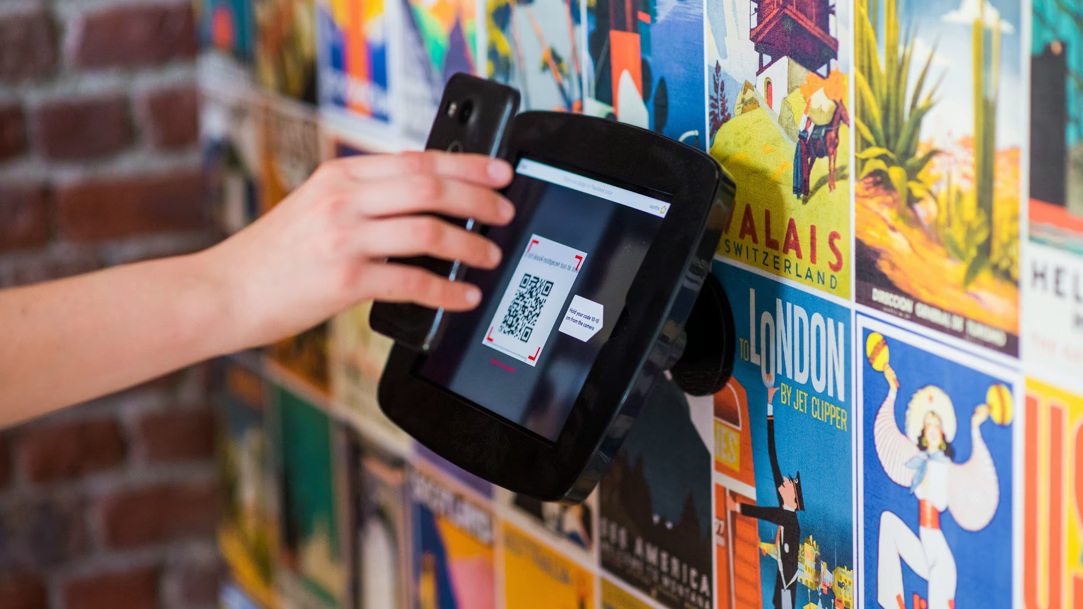
To the naked eye, a Quick Response (QR) code looks like a random mix of black and white squares. In reality, it is a highly efficient way to transmit digital data. These codes allow people to instantly access digital information without requiring any manual typing, changing our lives forever.
So, how does a visual pattern turn into a working hyperlink? It begins with your smartphone camera. To read the code, the phone first has to pick it out of the picture. It does this by looking for the three large squares in the corners, known as "finder patterns." These squares feature a specific ratio of black and white rings. Denso Wave (the company that invented the code) designed this specific pattern because it rarely occurs in natural print. Additionally, the code has three corner squares rather than four so the phone can tell which way is up. The empty fourth corner shows the orientation.
Once the phone finds the code, it uses the "timing pattern” (a dotted line of alternating black and white squares running between the corners) to figure out exactly where each row and column falls. The camera then reads the grid, translating the black squares into binary "1s" and the white squares into "0s." The software groups these into bytes and turns them back into a standard text string, like a web address. Finally, the operating system recognizes the text as a URL and prompts you to open your browser. Notably, the phone does all this decoding right on the device, and it only goes online when you actually tap the link.
The real magic behind this reliability is a built-in mathematical safeguard called Reed-Solomon error correction. Unlike traditional linear barcodes that fail if a single line is scratched, QR codes are designed with heavy data redundancy. The software adds backup bytes to the message. If a few data points are lost, the math can still figure out what the missing pieces were. This is why a QR code can still be scanned even if a logo is placed in the middle or if part of it is dirty or damaged, making QR codes superior to traditional barcodes. A standard barcode stores data in only one direction, limiting it to about 20 characters. A QR code stores data in two directions, allowing it to hold thousands of characters, from website links to paragraphs of text. It is this durability and data capacity that allowed QR codes to move from car factories in 1994 to the tables of restaurants and posters on city streets.
Of course, because these codes are so easy to generate, they have also opened the door to new security challenges. Since you cannot read the destination with your own eyes, criminals have started placing malicious QR codes over legitimate ones to trick people into visiting dangerous websites. Despite this downside, the underlying technology remains a brilliant solution, proving how a simple visual pattern can powerfully bridge the physical and digital worlds.
About the author
Operations & Logistics Officer
Dance has been part of my life for as long as I can remember. It all started when I was just a kid, barely even tall enough to see myself in the studio mirror. What began as a childhood hobby turned into years of lessons, practices and performances. Dance taught me discipline and patience, but more than that, it taught me how to tell stories without words, how to feel music in every step, and how to express myself through movement. In this modern world where technology advances at incredible speed, you can even see robots programmed to dance. They hit every beat with precision, executing choreography flawlessly. Even though it's impressing, but watching them, I can't help but feel that something is missing. Yes, they execute the moves, but they don't feel the music. And they'll never understand the joy of acing a new move or the adrenaline of performing for crowds of people. Real art, real passion, can't be programmed. That's why I joined Inkoders. Technology is a powerful tool, but it shouldn't be a replacement for our own words, whether in art, writing, or the way we connect through language. Dance allows me to express emotions through movement, and similarly, writing and literacy give us the power to express our thoughts, feelings, and experiences. In an age where AI can generate text in seconds, foundational literacy matters more than ever. As Operations and Logistics Officer, I want to help support this vision, so we can embrace technology without forgetting the fundamentals that makes us who we are.
Profile & more perspectives →More perspectives

To make cramming easier — RemNote
A personal AI tutor, file organisation system, note-taking engine and flashcards all in one place.
By Christie Leung Yan Ching11 Nov 20263 min read
Raising the Floor or Raising the Costs? The FTC Systemcore Hardware Debate
Will the switch from REV Control Hub to Motioncore benefit teams?
By Caleb Lo Chung Wai8 Nov 20264 min read

Fidelity is a Function of Neglect — Reconsolidation & the Violence of Recall
Our memories are not static records but fragile reconstructions, constantly edited and rewritten every time we dare to recall them.
By Averie Yip Yee Tsun7 Nov 20265 min read