 Inkoders
AI Can Write a Novel. But It Still Can't Write Literature.
The industry's rush to automate writing says less about AI than about what it has stopped valuing.

The French literary world is in uproar over C'était ça ou mourir (It Was Either That or Die), a debut novel by Canadian-Haitian author Thélyson Orélien. The book won the Prix du Roman Fnac and was longlisted for the Goncourt and the Renaudot - then an anonymous group called “Balance ton Claude” claimed it was “almost totally” written by AI, citing the detection tool Pangram. Orélien denied the accusation outright: “I have always loved creation and literature. I can’t see why I would feel compelled to use a machine”. His publisher, Grasset, defended him, calling the allegations “atrociously injurious” to a writer with an exceptional life story. The row has revived a familiar question with new urgency: if a book can be suspected of being machine-written, what exactly are prizes, publishers, and readers trying to certify?
My take: The longlisting itself isn't infuriating. What's really infuriating is the fact that the industry had to be embarrassed into remembering its purpose.
The withdrawal of C'était ça ou mourir is being sold as a cautionary tale about AI. That is nonsense. It is a market test, and readers failed the machine, not vice versa. Legitimacy vanished alongside the human signature, and this should terrify the publishers treating literature like some glorified content stream.
Of course AI can produce a passable story. We've already seen that it can mimic style, pace, even the most visceral of human emotions. And we all understand that what it cannot do is mean anything. It has no childhood to betray, no grief to transmute, no stubborn hope to risk on a page. This is strongly hypocritical to what literature is in itself, because at the end of the day, literature requires a soul, not just a syntax. Yet a machine has no skin in the game, so its sentences bear no stakes. It cannot bleed the way our authors do.
The elephant in the room is not the age-old, cliché debate over whether machines will replace writers. Avert your gaze instead to the publishers who behave like machines in their desperate pursuit of scale, speed and superficial safety while declaring it "innovation" (which it is not). If your business model needs AI to write books, don't grace yourself with the title of publisher, because all you're doing then is content farming with a literary veneer.
But here is where the hot take gets a second gear. The answer is not a blanket ban on the technology, but it is not acceptance either. The useful question would not be “Did AI touch this?” but “Who is accountable for the result, and do they have the literacy to know what they’re accountable for?” Notice that two kinds of literacy are doing the work here. Foundational literacy is the slow, human capacity to read closely, argue, revise, and recognise a sentence that means something, and it is what lets a writer stay as the responsible author rather than a name pasted onto AI output. Technological literacy is the ability to understand what these models actually do, where they fail, what data they were trained on, and it is what stops us from either worshipping the machine or burning it at the stake. Without both, “AI-assisted” becomes an alibi, and “anti-AI” becomes performative. With both, the question receives a reasonable answer: AI can be legitimate for research, structure-checking, translation drafts, metadata, and admin - the stuff that eats a writer’s time without shaping the voice, but only this and no more.
Literacy should not be a victim to efficiency. Automate the admin, the metadata, the blurbs, whatnot, but please - leave the writing to the people who actually have something to lose.
About the author
Editorial & Media Officer
The Clausius-Boltzmann formula for entropy is the mathematical statement that in a closed system, order doesn’t stay. Stars fade and dust settles. Everything drifts toward mess. This concept really unsettled me when I first discovered it at ten. Now I’m fourteen, and it makes me ask questions. What can possibly be accomplished for a universe that refuses to stay tidy? Do you somehow try to freeze it, or do you force temporary order inside the drift? That question pulls the rest together. My widespread passions in literature, history, mathematics, politics and sciences are merely different perspectives of watching the same process - holding a mind still, making sense of why one arrangement of power lasted, and finding pattern before it disintegrates. I am an avid debater - as the vice captain, I love the tournaments, thrive under pressure, and savour how a good argument forces you to fiercely defend yourself and make concessions. My strong performance at the World Scholar’s Cup taught me to link ideas across fields and convey them clearly - skills that I am honoured to bring to the table at Inkoders. I enjoy writing as a student journalist and author, because language is one of the few tools we have for holding shape against the current. But what remains of a thought once the mind that held it is gone, and how far can we stretch the brief light we are given? I do not have a tidy answer. Rather, I look back to the places where language, knowledge, and systems intersect. Literacy is the oldest tool we have for building order, and technology is one of the newest. As the editorial and media officer at Inkoders, that is the work I want to do - reinforcing the tales we tell, and giving them a longer life before they dissolve.
Profile & more perspectives →More perspectives
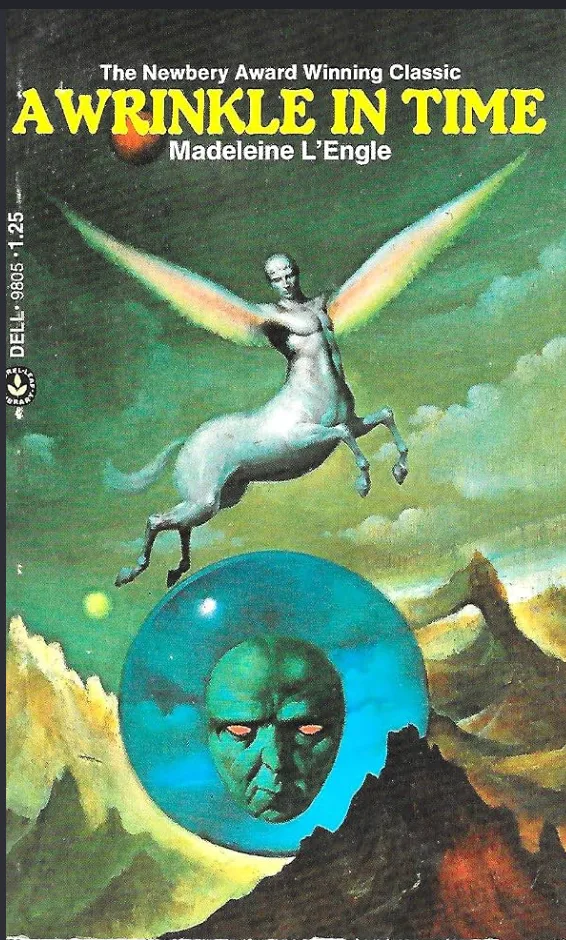
Bending Space, Time and Conformity: A Madeleine L’engle Literary Classic
Meg Murry embarks on a captivating journey through tesseracts to rescue her missing father from an all-consuming cosmic entity, exploring core themes of individuality and the importance of embracing one's imperfections within A Wrinkle in Time.
By Anette Chan Tsz Kiu3 Nov 20265 min read
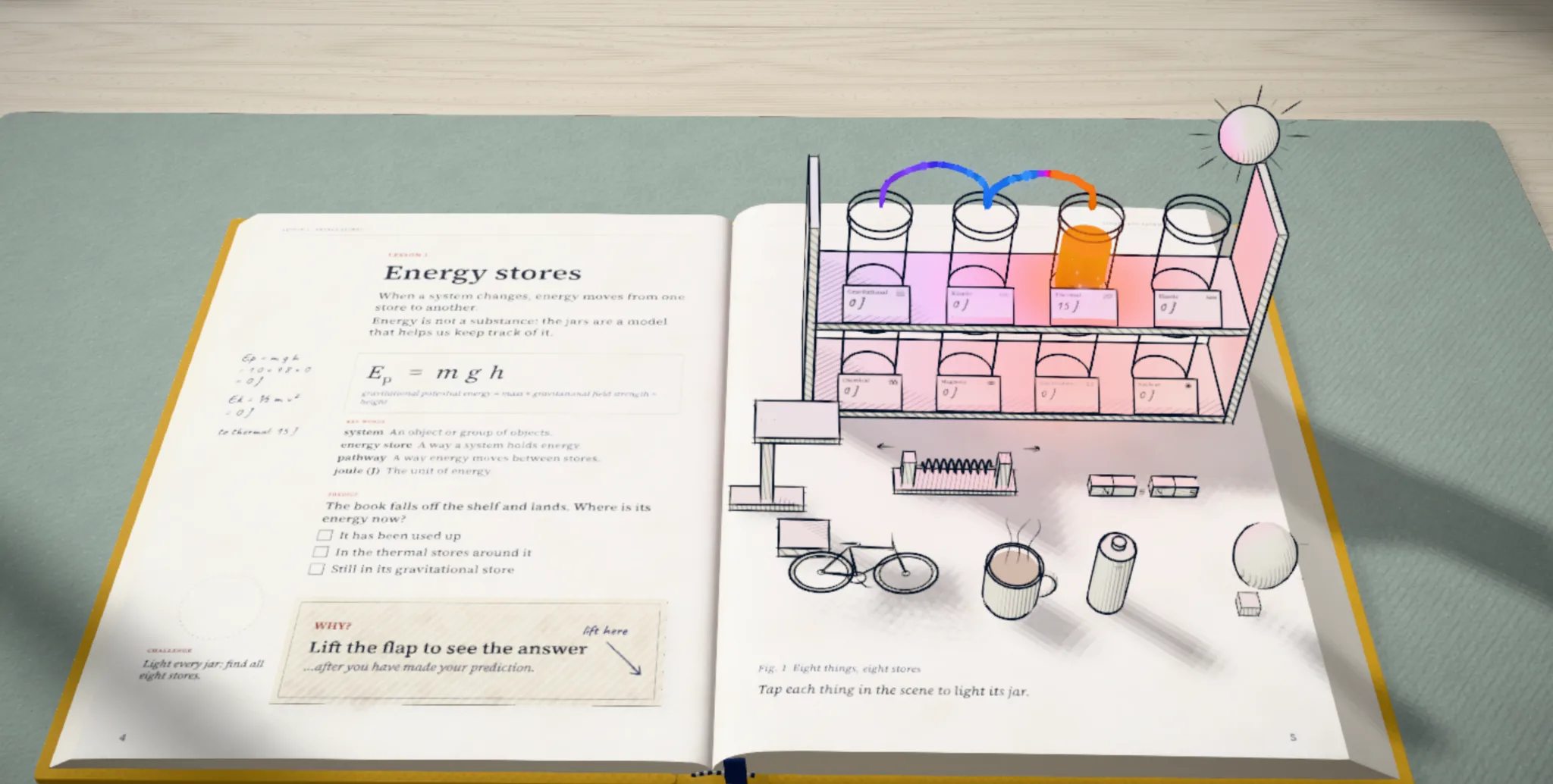
Beyond the Page: How Interactive 3D Textbooks Are Revolutionizing Learning
By transforming abstract concepts into interactive digital experiences, new 3D textbook platforms are bridging the gap between foundational education and modern technological literacy.
By Alpha Chan Lok Chi2 Nov 20263 min read

The Destruction of V.Hive: Why Vandalism Undermines the Fight for Access
The looting of Team Vitality’s Paris headquarters highlights the tragic irony of destroying a community hub that specifically kept prices low to support fans with modest incomes.
By Kaden Wong Ho Shun20 Oct 20263 min read