 Inkoders
Bending Space, Time and Conformity: A Madeleine L’engle Literary Classic
Meg Murry embarks on a captivating journey through tesseracts to rescue her missing father from an all-consuming cosmic entity, exploring core themes of individuality and the importance of embracing one's imperfections within A Wrinkle in Time.

Marketing & Communications & Creative & Brand Design Officer
3 Nov 2026 · 5 min read
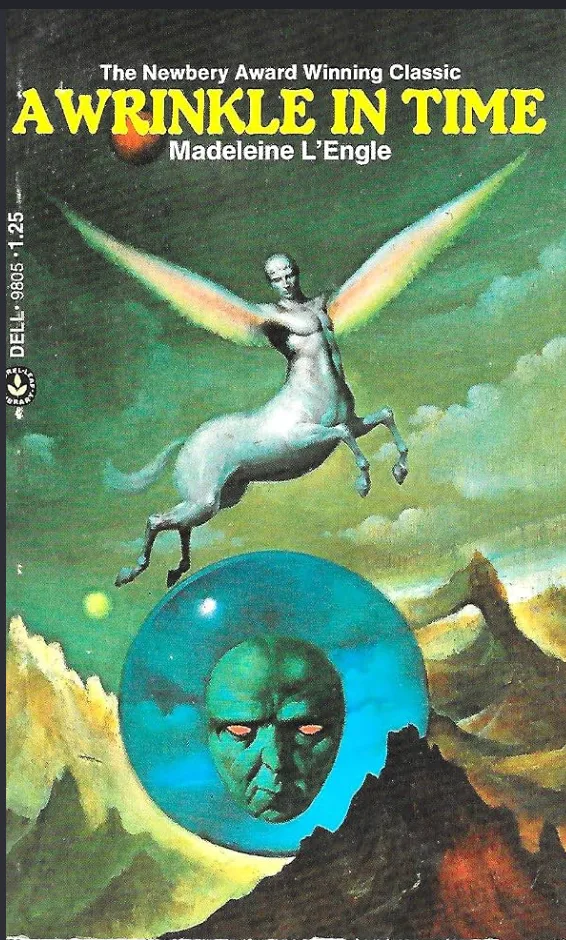
Among the “Golden Age” of science fiction literature, Madeleine L'Engle's 1962 novel A Wrinkle in Time remains a classic staple of avant-garde writing and, personally, one of the most iconic and influential pieces of young adult fiction I’ve read. The tale depicts a flawed, hot-tempered, and logical young girl as the central protagonist of a hard-science fiction/fantasy adventure, and seamlessly blends high-level scientific concepts while simultaneously framing the psychological horror of conformity. However, the subversion of traditional writing conventions and plot points expected of a female writer brought the novel a tremendous mix of controversy and praise, even leading to bans in international public libraries. But amidst an age of digital affective illiteracy and a crisis of emotional apathy, it's important to recognise the true power of collective strength and technological feats.
The story follows the narrative of an awkward young girl who excels at maths, struggling in school while coping with the sudden disappearance of her astrophysicist father. She, her gifted young brother Charles Wallace, and her friend Calvin O’Keefe meet three mysterious celestial beings: Mrs Whatsit, Mrs Who, and Mrs Which. The three act as the story’s guardian angels and symbols of divine judgement, with Mrs Whatsit representing courage and transformation, Mrs Who symbolising wisdom and intellectual clarity, and Mrs Which representing transcendent power, authority, and love. The trio discovers that Meg’s father is imprisoned across the universe, in which they must travel using “tesseracts”-- Or more cleverly, “wrinkles in the fabric of space and time” that allow the children to transport themselves to different planets. It's essential to comment on the hyper-realistic worldbuilding that L'Engle provides to the reader as she blends high-level scientific concepts like 4th and 5th dimensions, quantum physics, and space-time geometry while mixing fantasy elements and mythology. It’s the diffusion of metaphysics and spiritual themes that make literary pieces like A Wrinkle in Time so acclaimed, and it's as beautiful when I read it at 8 years old as when I reread it just to form this review.
As the group tesser across the cosmos, they witness the parasitic supernatural force known as the “Dark Thing”, which acts as a cosmic, evil shadow threatening the universe, including Earth. In reality, the Dark Thing served as an abstract concept of universal evil, darkness, and ignorance that shadowed the world during the time period where the book was written, nearing the Cuban Missile Crisis. It is the embodiment of moral and spiritual darkness, and its pervasive control engulfs planets that have surrendered to tyranny and a cosmic force of malevolence. The climax of the tale are the children’s arrival to Camazotz, a planet completely dominated by the Dark Thing, and discovers the psychological horror of a uniform society, as all the children bounce their balls in synchronised rhythm and adults act as puppets controlled by a disembodied telepathic brain known as IT. The radicalist depiction of a cold, uniform and artificial environment as Camazotz, with its name deliberately alluding to a Mayan term for monstrous underworld bat-like creatures, establishes an immediate sense of dread and darkness.
In the context of L’Engle’s writing taking place at the height of the Cold War, this sequence, and the overall abstract concept of a dark, looming entity of evil, serves as a poignant critique and allegory of Soviet Communism and totalitarian regimes. Camazotz is the conceptual image of a state controlled by a single force of evil, where anything less than identical unison is punished, galvanising the dangers of forced conformity, authoritarian censorship and lack of free will. IT, while supposedly being an idealised version of logic and total reason, is seen as nothing more than a giant, disembodied pulsating brain that is a physical commander, that is also a puppet to a supreme cosmic force hellbent on absolute control.
Although this serves as more of a simplified and technical analysis of the book’s core themes, its timeless blend of a flawed heroine and cultural longevity has made it more relevant than ever, as homogenisation and viral social media trends tend to push a crowd in one direction. At its core, the story deals with a relentless struggle against conformity and darkness within the human heart. It reinforces the idea that individuality and love are the ultimate weapons against destructive forces in a totalitarian environment, as “When the Power of Love beats the Love of Power, the World knows Peace.”
So if you want to explore an endless world of physics, space travel, and unconventional subversion of conformity, make sure to check out A Wrinkle in Time. I haven’t spoiled the ending quite yet, but maybe you just have to wrinkle the pages in your book to find it out. (Pun very intended)
About the author
Marketing & Communications & Creative & Brand Design Officer
In a world shaped by automated algorithms and artificial innovation, the intersection of art and technology is more essential than ever. As a child, my world was built with paintbrushes and colored pencils at my disposal, and I was encouraged to push myself to higher creative boundaries, eventually finding endless ways to color outside the lines and express myself in a thousand hues. As I grew with my art, I discovered the equally fascinating world of technology, of circuitry and code frameworks that acted as puzzles that I itched to solve. I had believed that these two contrasting worlds could never overlap, but like two cosmic galaxies colliding into one, the fields of logic and passion work cohesively. With a background in design and a growing passion for STEAM, I joined Inkoders believing that foundational literacy for the up-and-coming generation has a tangible impact on our community's perception of art and engineering. Having undertaken and managed multiple artistic projects in my community, whether for Po Leung Kuk or my local robotics team, I believe that education regarding the proper use of artificial intelligence and cyberdata is necessary to address the looming problem of generative AI. I have a deep love for mathematics and astronomy, enjoying puzzles that challenge my critical thinking and develop mechanical skills in my free time. Inkoders is a community that navigates educational and technological crossroads, binding multiple fields to create a nuanced framework that acts as living proof that innovation is cultivated, grown, and fostered only if we dare to do so.
Profile & more perspectives →More perspectives
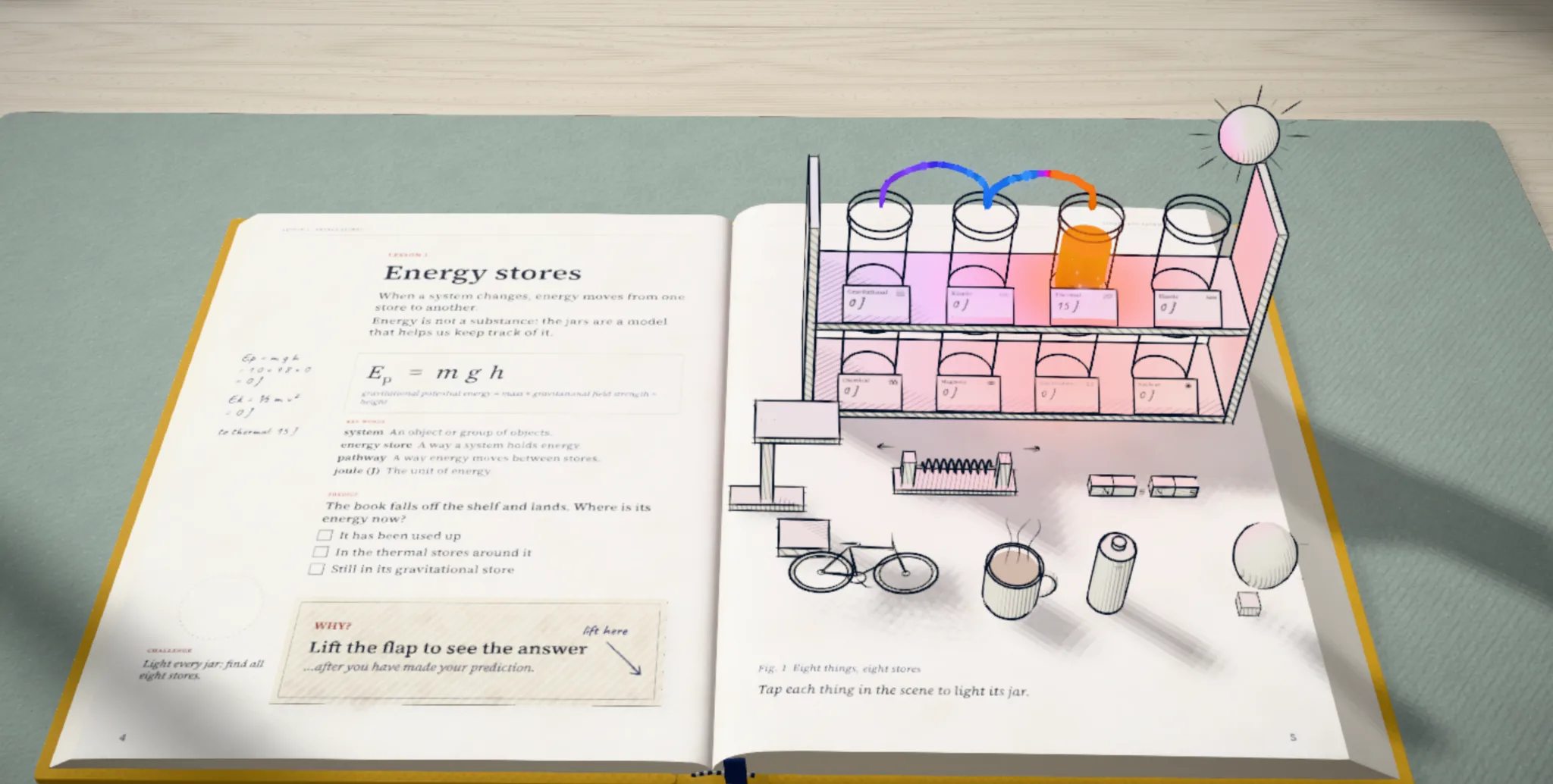
Beyond the Page: How Interactive 3D Textbooks Are Revolutionizing Learning
By transforming abstract concepts into interactive digital experiences, new 3D textbook platforms are bridging the gap between foundational education and modern technological literacy.
By Alpha Chan Lok Chi2 Nov 20263 min read
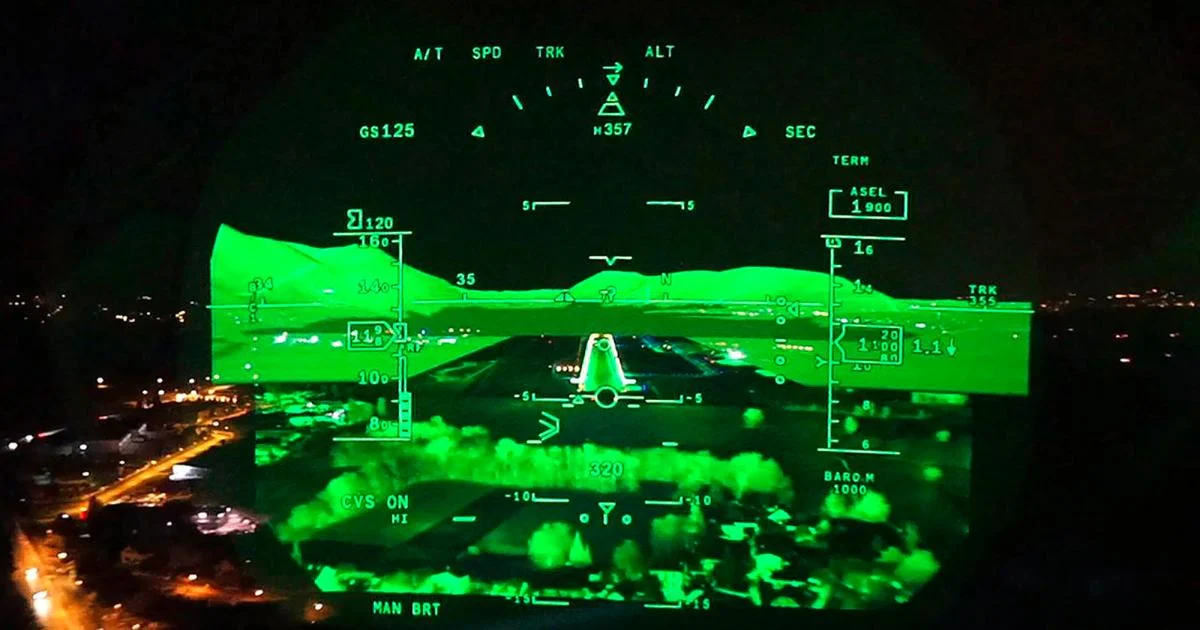
Seeing Through the Fog: How SVS and EFVS Are Transforming Low-Visibility Operations in Aviation
By fusing synthetic terrain data with real-time sensor imagery, new flight vision technologies are enabling pilots to navigate hazardous low-visibility conditions with unprecedented precision.
By Adrian Cheung1 Nov 20263 min read
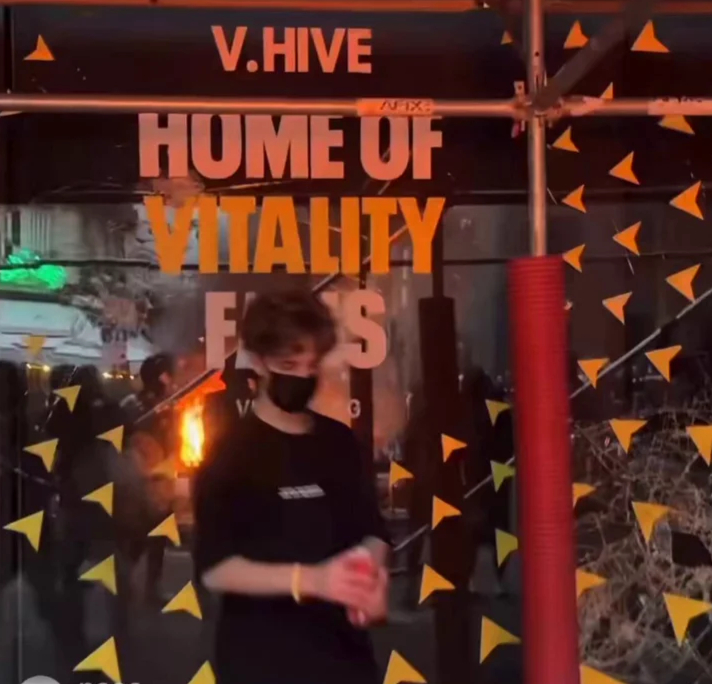
The Destruction of V.Hive: Why Vandalism Undermines the Fight for Access
The looting of Team Vitality’s Paris headquarters highlights the tragic irony of destroying a community hub that specifically kept prices low to support fans with modest incomes.
By Kaden Wong Ho Shun20 Oct 20263 min read