 Inkoders
Seeing Through the Fog: How SVS and EFVS Are Transforming Low-Visibility Operations in Aviation
By fusing synthetic terrain data with real-time sensor imagery, new flight vision technologies are enabling pilots to navigate hazardous low-visibility conditions with unprecedented precision.

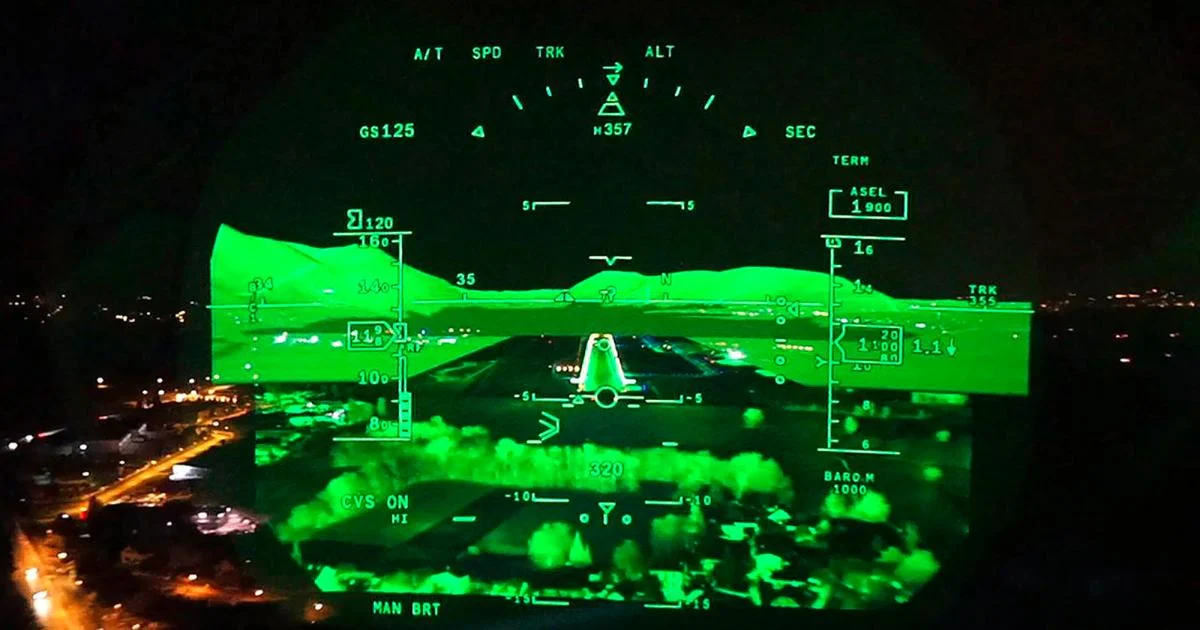
Synthetic Vision Systems (SVS) and Enhanced Flight Vision Systems (EFVS) are quietly reshaping the way pilots navigate some of aviation’s most dangerous conditions. For decades, low visibility, whether caused by fog, darkness, heavy rain, or smoke, has been one of the greatest challenges in flight operations. These technologies do not replace a pilot’s judgment or training; instead, they give crews better tools to understand what lies ahead, reducing uncertainty during critical phases of flight such as approach and landing. SVS creates a highly detailed, computer-generated view of the world using GPS positioning, aircraft attitude, terrain databases, obstacle data, and runway information. Rather than relying solely on what can be seen through the windshield, pilots receive a clear synthetic representation of mountains, buildings, runways, and the intended flight path. This is especially valuable in mountainous regions, unfamiliar airports, or nighttime operations, where a moment of disorientation can have serious consequences. By presenting terrain and obstacles in an intuitive visual format, SVS helps pilots maintain situational awareness even when the outside world is invisible. EFVS takes a different approach by using real-time sensor technology, most commonly forward-looking infrared cameras, to enhance the pilot’s actual view of the external environment. Unlike SVS, which reconstructs the world from data, EFVS shows what the sensors can detect in the present moment. Infrared imagery can reveal runway lights, runway edges, terrain features, and other aircraft through darkness, haze, or fog that would otherwise obscure natural vision. On approved operations, this can allow flight crews to continue an approach after acquiring required visual references through the enhanced display, improving operational reliability without compromising safety. The most advanced aircraft increasingly combine both systems into a Combined Vision System. In this setup, synthetic terrain and flight-path guidance are overlaid with live sensor imagery, giving pilots both the expected environment and confirmation of the real conditions outside. This combination is powerful because each system compensates for the other’s limitations: SVS provides consistency and context, while EFVS provides real-world validation. Together, they represent a major step toward safer all-weather aviation. As aviation continues to modernize, SVS and EFVS are no longer futuristic concepts reserved for experimental aircraft; they are becoming practical safety tools across commercial, business, and regional aviation. Their purpose is simple but profound: to help pilots see more, understand more, and make better decisions when visibility is at its worst. In an industry where every second and every meter of awareness matters, these systems are helping turn low-visibility flying from a high-risk challenge into a more manageable, more predictable operation.
About the author
Creative & Brand Design Officer
Long before I understood the science of aviation, I was drawn to the sight of an aircraft moving steadily across the sky. To me, flight has always represented more than reaching a destination; it is about responsibility, precision, adaptability, and the courage to lead others through uncertainty. My dream of becoming a pilot has taught me to value both the technology that makes flight possible and the human judgement that keeps it purposeful. The cockpit is a meeting point between human judgement and technological advancement. Artificial intelligence, automation, and advanced navigation systems are reshaping aviation, helping pilots process information and respond to increasingly complex situations. Yet technology is only as powerful as the person who understands and uses it. A system may present the data, but the pilot must interpret it. A machine may suggest a solution, but the pilot must decide whether it is the right one. This balance between technology and human intention is also what draws me to videography. Cameras, editing software and AI powered tools can help transform an idea into a polished film but they cannot determine which moments deserve to be remembered or what story they should tell. Behind every meaningful video is a person choosing the angle, the pacing, the message and the emotion that reaches its audience. This is why I joined Inkoders. To help people navigate a changing technological world without losing the foundational skills that make us thoughtful, creative, and independent. Technology may guide us forward, but human judgement must still decide the direction.
Profile & more perspectives →More perspectives

The Destruction of V.Hive: Why Vandalism Undermines the Fight for Access
The looting of Team Vitality’s Paris headquarters highlights the tragic irony of destroying a community hub that specifically kept prices low to support fans with modest incomes.
By Kaden Wong Ho Shun20 Oct 20263 min read

One Canvas, Zero Tab Switching: Miro
What if your brainstorm, your plan, and your task list all lived in the same place?
By Max Shea Man Nok19 Oct 20263 min read
From Hackathon Champions to Visionaries: The Journey of Inkoders' Founders
Discover how the founders of Inkoders leveraged international competition success and a shared passion for AI to become a driving force in the digital era.
By Marcus Mak Siu Lung19 Oct 20263 min read