 Inkoders
Eyes on the Future: How AI Retinal Imaging is Transforming Dementia Prevention
The Chinese University of Hong Kong’s BEAT AD programme is leveraging AI-powered retinal scans to identify dementia risks early and help older adults improve their cognitive health.

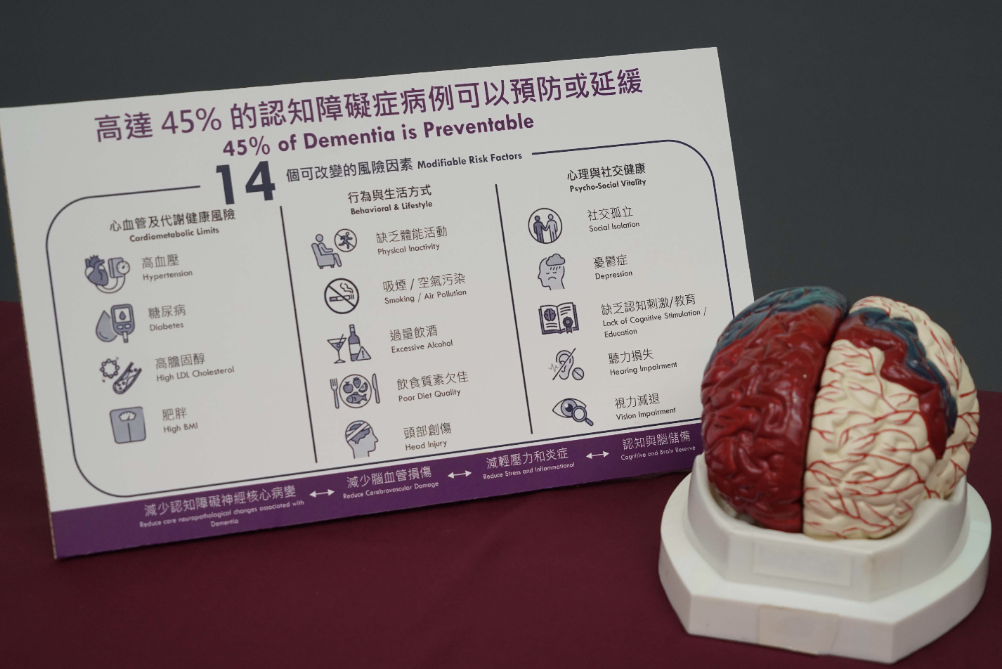
The Chinese University of Hong Kong’s BEAT AD Programme is using AI-powered retinal imaging to detect dementia risk early and help older adults protect their brain health. It was created in response to Hong Kong's dementia burden, which was projected to rise from 180 thousand cases in 2026, to 240 thousand by 2036. Since nearly half of dementia cases may be prevented or delayed by addressing 14 modifiable risk factors (e.g., physical inactivity, hypertension, social isolation), CUHK set out to identify vulnerable seniors before symptoms appear. Launched in October 2023 as an 18-month pilot, the programme was developed by CUHK’s Faculty of Medicine with the Charles K. Kao Foundation for Alzheimer’s Disease, co-founded by the late Nobel laureate Professor Charles K. Kao, who lived with Alzheimer’s. A donation from Dr Brigitte Lin Ching-hsia, the programme’s patron, helped make the pilot possible, which then served more than 1500 older adults. Among 831 cognitively normal participants, about 21% screened positive using the AI retinal technology, identifying them as high risk. About a year later, follow-up data from 532 participants showed that those who received personalised brain health management improved their cognitive scores to levels comparable to those of people three years younger. Currently, CUHK is expanding the model into the wider community, launching BEAT AD@WTS, which will launch in Wong Tai Sin in January 2027, offering free evaluations and preventative support to 2700 residents aged 60-79 over the span of two years. The implementation of AI has come a long way, from basic LLMs to software capable of reducing health risks. These positive outcomes show how AI can shape healthcare when it works alongside medical professionals. Of course, no single program solves dementia, but this achievement shows how far we’ve come, and how much further AI can go.
About the author
Director of Creative & Brand Design, Inkoders Hong Kong
The growing presence of tech adjourned with AI is becoming more prevalent across every field, creating a stark divide: those who adapt to new technology, and those who get left behind. I want to help close that gap, contributing to something meaningful while learning relevant skills along the way. Inkoders’ mission: bridging technological and foundational literacy aligns with how I believe growth happens best, that being through hands-on interaction, collaboration, and adaptation. Design matters more than people give it credit for. Through a multitude of creative projects such as slide deck or magazine design, promotional posters, and video editing, I've learnt that the manner in which something is presented as, shapes how it's received; people form assumptions based on initial appearance prior to interaction. Hence, this motivates me to set high expectations for design execution. Learning photography has further sharpened this instinct, especially while travelling or spending time with friends, since capturing a moment well requires the same attentiveness to composition and framing that good design reflects. Outside of design, I've played the oboe since I was six, placing and winning at local competitions. For years, I doubted AI could ever come close to replicating musicianship, and I've slowly been proven wrong, albeit that hasn't erased the parts of music that remain irreplaceable. If anything, it has further reinforced the idea that the future isn't tech replacing fundamentals, but rather, having the two working in conjunction, which is exactly why Inkoders' mission resonates with me.
Profile & more perspectives →More perspectives

The AI Career Rush: How Hong Kong’s Tech Push Is Rewriting the Rules for Young Job Seekers
Hong Kong companies are scrambling to hire AI talent, yet entry-level tech job postings have plummeted by more than 70%. Welcome to the city’s new career paradox—where having a degree is no longer enough, and the bottom rung of the corporate ladder is rapidly disappearing.
By Marcus Wong Ka Him27 Nov 20263 min read

The Collapse of Character.ai: A Cautionary Tale of Financial and Legal Overreach
Once valued at over $1 billion, Character.ai has filed for Chapter 11 bankruptcy following a toxic mix of unsustainable compute costs, high-profile litigation, and intense copyright pressure.
By Kaden Wong Ho Shun22 Nov 20264 min read

AI — A therapist?
In the 2026 AXA Mind Health Study, two-thirds (66%) of respondents said they have used AI tools for mind health-related purposes.
By Joan Tso Chung Yin21 Nov 20263 min read